


Why Are Foreign Brands More Popular Than Local Brands in Developing Countries?
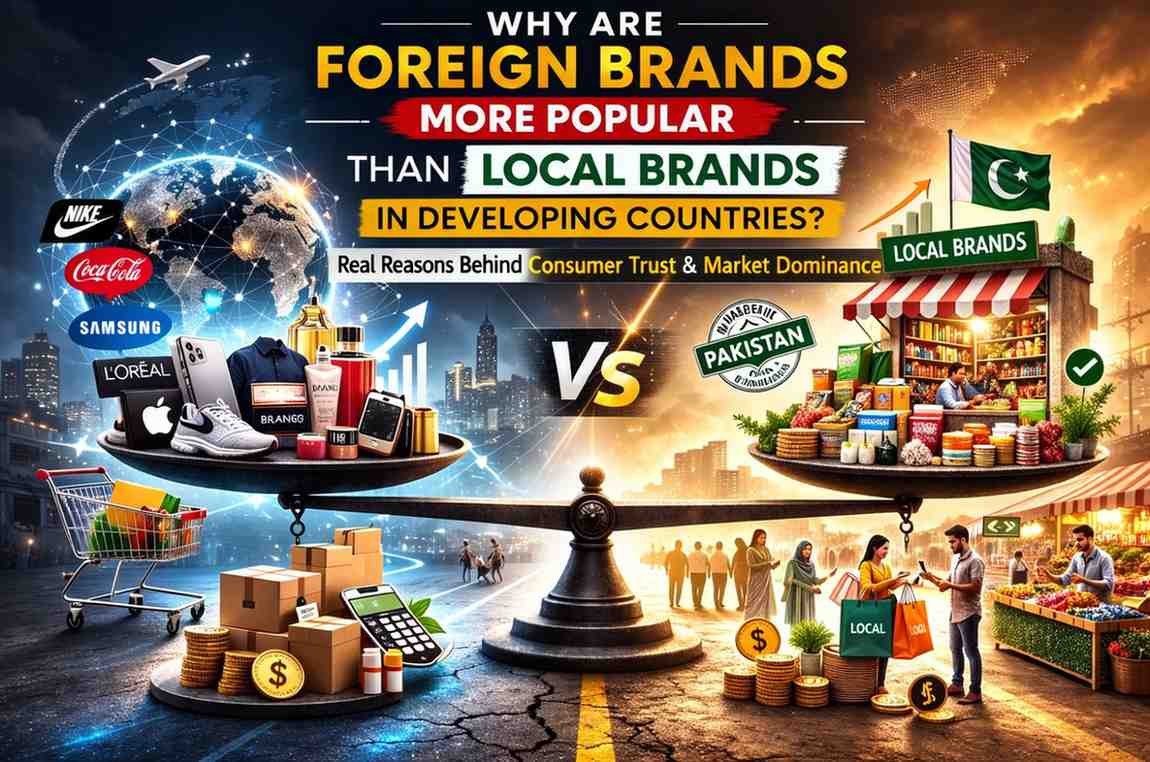
Why Are Foreign Brands More Popular Than Local Brands in Developing Countries?
In many developing countries, consumers often prefer foreign brands over local ones. From skincare and fashion to electronics and packaged foods, international products usually enjoy higher trust and stronger demand. But why does this happen?
Is it about quality, marketing, status, or something deeper in consumer psychology?
In this detailed guide, we will explore the real reasons why foreign brands dominate local markets in developing economies, using market trends, consumer behavior insights, and brand perception analysis.
1. Perceived Quality and Trust Factor
One of the biggest reasons foreign brands are more popular is perceived quality.
Many consumers believe that:
Imported products have better standards
International brands follow strict quality control
Foreign companies use advanced technology
This creates a strong brand trust factor. Even if a local product has similar quality, people may still assume the foreign one is better.
2. Strong Branding and Global Reputation
International brands invest heavily in:
Global marketing campaigns
Celebrity endorsements
Premium packaging
Social media advertising
Because of this, they build a powerful global brand image.
For example, when people see a globally recognized brand, they associate it with:
Prestige
Reliability
International standards
Local brands often struggle with brand positioning and lack large marketing budgets.
3. Status Symbol and Social Influence
In many developing countries, foreign products are seen as a status symbol.
Owning or using international brands can make consumers feel:
Modern
Successful
Socially upgraded
This psychological factor plays a huge role in consumer buying behavior. People sometimes buy brands not only for function, but for social validation.
4. Better Innovation and Technology
Foreign brands often lead in:
Product innovation
Research and development (R&D)
Advanced manufacturing technology
Developing countries may not always have strong industrial infrastructure, which makes it harder for local brands to compete in innovation.
As a result, consumers assume international products are more advanced and reliable.
5. Wider Availability and Distribution Channels
Many global companies have:
Strong supply chain systems
International distribution networks
E-commerce presence
Because of better distribution, foreign brands are easily available in supermarkets, malls, and online stores.
Local brands sometimes face:
Limited reach
Weak logistics
Poor retail placement
This reduces their visibility and market share.
6. Aggressive Marketing and Advertising
Marketing plays a huge role in market dominance.
Foreign brands often use:
Emotional storytelling
Influencer marketing
Digital ads
Television campaigns
This increases brand awareness and customer engagement.
In comparison, many local businesses operate with limited marketing strategies, which affects their brand recall value.
7. Consumer Mindset and Colonial Influence
In some developing countries, there is a long-standing belief that:
“Imported means better.”
This mindset can be influenced by:
Historical factors
Media exposure
Western cultural dominance
Over time, this belief becomes part of consumer behavior patterns.
8. Pricing Strategy and Value Perception
Interestingly, foreign brands are not always cheaper. In fact, many are more expensive.
However, consumers often associate higher price with:
Premium quality
Durability
Long-term value
This creates a strong value perception advantage over local alternatives.
Challenges Faced by Local Brands
Local brands often struggle with:
Limited funding
Weak branding strategy
Lower consumer trust
Inconsistent product quality
Less global exposure
But this does not mean local brands cannot compete.
Many successful local companies grow by focusing on:
Cultural understanding
Affordable pricing
Local market needs
Personalized customer service
Can Local Brands Compete with Foreign Brands?
Yes absolutely.
To compete effectively, local brands need to:
✅ Improve product quality standards
✅ Invest in digital marketing
✅ Build strong brand identity
✅ Focus on customer trust
✅ Highlight “Made for Local Needs” positioning
When local companies understand consumer pain points better than international competitors, they can build strong market loyalty.
Conclusion
Foreign brands are more popular than local brands in developing countries due to a mix of brand perception, quality trust, marketing power, innovation, and social influence.
However, the market is evolving. Consumers are becoming more aware, and many are now supporting local businesses that offer quality and affordability.
In the future, the real winner will not be foreign or local but the brand that builds trust, delivers consistent quality, and understands its customers deeply.
Recent Posts

10 Hidden Online Shopping Secrets in 2026 That Can Save You Money (Most People Don’t Know #7)
Online Shopping vs Physical Stores: Which is Better in Pakistan 2026? (Complete Guide)




Lip Balm vs. Lip Oil: Which One is the Secret to Perfect, Healthy Lips?


Face Oil vs. Face Serum: The Ultimate Guide to Choosing the Right One for Your Skin

Mini Portable Smart Projectors vs 4K Smart TV: Which One Should You Choose?

Welcome to Hamaab - Your Trusted Online Store for Gadgets, Cosmetics, Jewelry, and More in Pakistan
At Hamaab, we offer a wide variety of high-quality products at affordable prices. Whether you're looking for the latest gadgets, premium cosmetics, stylish jewelry, or fashionable clothing, we have something for everyone. We carefully curate our product catalog to ensure that every item meets your highest standards of quality and value.