


Why Your Acne Keeps Coming Back – Hidden Causes Dermatologists Warn About
Why Your Acne Keeps Coming Back – Hidden Causes Dermatologists Warn About
Acne is perhaps one of the most frustrating skin conditions because just when you think you’ve conquered it, it returns. Many people feel stuck in an endless cycle of clearing their skin ad then dealing with a fresh breakout weeks later. But why does this happen? According to dermatologists, recurring acne is often due to hdden triggers and common mistakes in how we treat our skin
Understanding the root causesbeyond just surface oil—is the only way to break the cycle an achieve lasting clarity
My Personal Struggle with Recurring Acne
For years, I felt like I was fighting a losing battle against my skin. I would go through phases where my skin seemed to finally clear up, and I would get my hopes up, only to wake up a week later to a painful new cluster of cysts along my jawline or forehead. I felt defeated and embarrased. I tried everything: harsh drying lotions, cutting out sugar, and scrubbing my face three times a day. I thught I wasn't trying hard enough. It wasn't until I stopped guessing and started researching the hidden reasons behind recurring acne that I realized I was actually sef-sabotaging my progress by being too aggressive.
The Sneaky Reasons Your Acne Won't Go Away
Acne isn't just about dirty skin. If it keeps coming back, deeper factors are usually at play. Dermatologists often point to these hidden culprits:
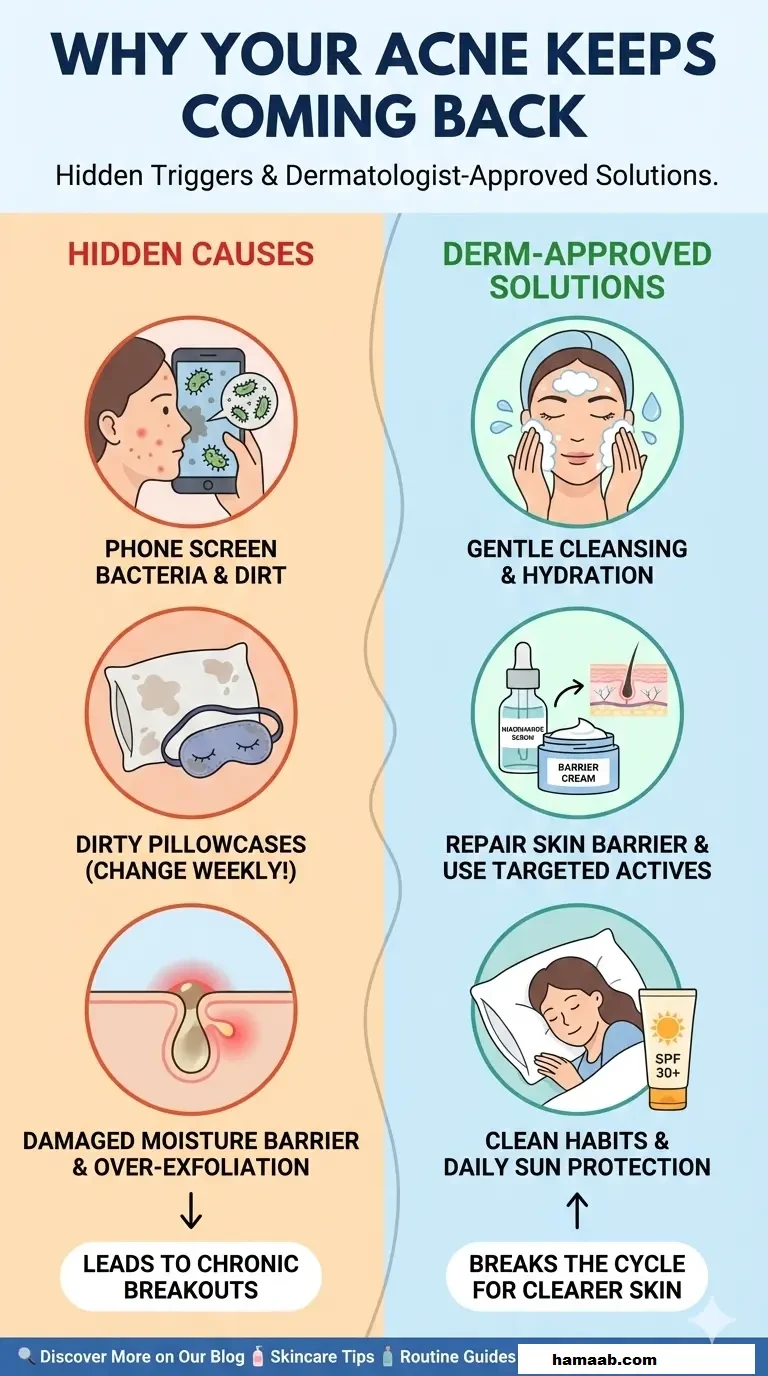
A Damaged Moisture Barrier: If you over-exfoliate or use too many harsh actives (like benzoyl peroxide and salicylic acid together), you destroy the skin's protective barrier. A broken barrier lets bacteria in and moisture out, leading to more inflammation and chronic breakouts.
Hormonal Fluctuations: This is the most common cause of recurring adult acne, especially along the jawline and chin. It often cycles with menstruation or periods of high stress.“Sneaky” Pore-Cloggers: You might be using "oil-free" makeup, but ingredients like coconut oil, algae extract, or certain silicones in your hair products or foundation could be silently clogging your pores.
Dietary Inflammation: While pizza doesn't cause acne for everyone, high-glycemic foods (sugar, white bread and dairy can spike insulin, which increases oil production and inflammation in acne-prone individuals.
Chronic Stress: Stress raises cortisol levels. Cortisol signals your sebaceous glands to go into overdrive, producing thicker, stickier sebum that clogs pores more easily.
Step-by-Step Strategy to Break the Acne Cycle
To stop acne from returning, you need a routine that treats the acne gently while repairing the skin.
1. Prioritize Barrier Repair The Crucial First Step
Before you attack the acne, you must ensure your skin can handle treatment. If your skin is red, stinging, or tight, stop all actives.
Use: Gentle, non-foaming cleansers.
Focus on: Hydrating serums (hyaluronic acid) and barrier-repairing moisturizers containing ceramides.
2. Introduce Targeted Actives Slowly
Once your barrier is healthy, introduce ingredients that stop acne at the source. Do not use all of these at once.
Retinoids (Adapalene or Retinol): The gold stan preventing clogged pores long-term. Use at night, starting 2-3 times a week.
Salicylic Acid (BHA): Best for dissolving oil deep inside the pore. Great as a cleanser or spot treatment.
Benzoyl Peroxide: Kills acne-causing bacteria. Best used as a short-contact wash to minimize irritation.
My Mid Journey Insight
The biggest game-changer for me was realizing that when it comes to acne treatment, "more" is absolutely not better. I used to layer a strong salicylic acid toner right after a benzoyl peroxide wash, thinking I was "nuking" the pimples. My skin was constantly red, tight, and peeling—and still breaking out because the barrier was destroyed.
Once I scaled back to a gentle, hydrating cleanser and focused on moisturizing, and only used my retinoid treatment every other night, the inflammation finally calmed down. It took patience, but the angry redness started fading within a few weeks, and new breakouts became smaller and less painful.
3. Don’t Skip Moisturizer Even if You Are Oily
Drying out your acne actually makes it harder to heal and leads to more scarring.
Choose: Lightweight, oil-free, or gel-cream moisturizers labeled "non-comedogenic."
Benefits: Keeps the skin flexible so trapped oil can escape, and reduces the inflammation that causes redness.
4. Daily Sunscreen is Non-Negotiable
Sun exposure darkens post-acne marks (hyperpigmentation) and dries out the skin, triggering rebound oil production.
Use: Mineral or chemical SPF 30+ designed for acne-prone skin.
Lifestyle Habits That Trigger Recurring Acne
Sometimes your skincare routine is perfect, but your habits are sabotaging you.
Dirty Pillowcases: You lie on them for 8 hours a night. Change them every 2-3 days to avoid re-introducing bacteria and oils to your face.
Cell Phone Screen: Your phone is covered in bacteria. When you hold it against your cheek, you transfer that grime directly to your pores. Use earbuds or speakerphone.
Hair Products: Pomades, oils, and heavy conditioners can migrate to your forehead and hairline. Try to keep hair off your fce when sleeping.
What to AVOID When Treati Recurring Acn
Picking and Popping: This spreads bacteria deeper into the skin, turns a small pimpe into a large cyst, and guarantees scarring.
Physical Scrubs (Apricot Pits, Walnut Shells): These cause micro-tears in inflamed skin, spreading infection.
Trying New Products Every Week: Give an acne treatment at least 6–12 weeks to work. Constantly switching irritates the skin and never gives a product a chance to be effective.
Drying Alcohols: Avoid toners with denatured alcohol (alcohol denat) high on the ingredient list.
My Final Thoughts & Current Skin State
Today, my skin isn't "perfect"—I still get the occasional hormonal spot during that time of the month. However, the cycle of constant, painful, full-face breakouts has completely stopped. Because my skin barrier is now healthy and I use retinoids consistently, the rare pimples I get heal in two days instead of lingering for two weeks. Understanding that treating acne is a marathon, not a sprint, and listening to what dermatologists actually advise (rather than just following trends) finally broke the cycle for me.
FAQs
1. Why does my acne get worse before it gets better when I start a new product? This is called "purging." Ingredients like retinoids speed up cell turnover, bringing pre-existing clogs to the surface faster all at once. It usually lasts 4–6 weeks.
2. Can diet really cure my acne? For some people, reducing dairy and high-sugar foods significantly helps, but diet alone rarely "cures" acne if genetics or hormones are the main driver.
3. How do I know if my moisture barier is damaged? Your skin feels tight, itchy, looks red, stings when you apply basic moisturizer, and is producing more oil than usual while still feeling dry underneath.
4. Is it okay to use salicylic acid and retinol together? Generally, no. Using them at the same time is too iritating for most people. Use them on alternate nights, or use salicylic acid in the morning and retinol at night.
5. When should I see a dermatologist? If you have tried over-the-counter retinoids and gentle care for 3 months with no improvement, or if your acne is deep, painful, and cystic, you should see a professional to prevent scarring.
Recent Posts

10 Hidden Online Shopping Secrets in 2026 That Can Save You Money (Most People Don’t Know #7)

Online Shopping vs Physical Stores: Which is Better in Pakistan 2026? (Complete Guide)


Lip Balm vs. Lip Oil: Which One is the Secret to Perfect, Healthy Lips?
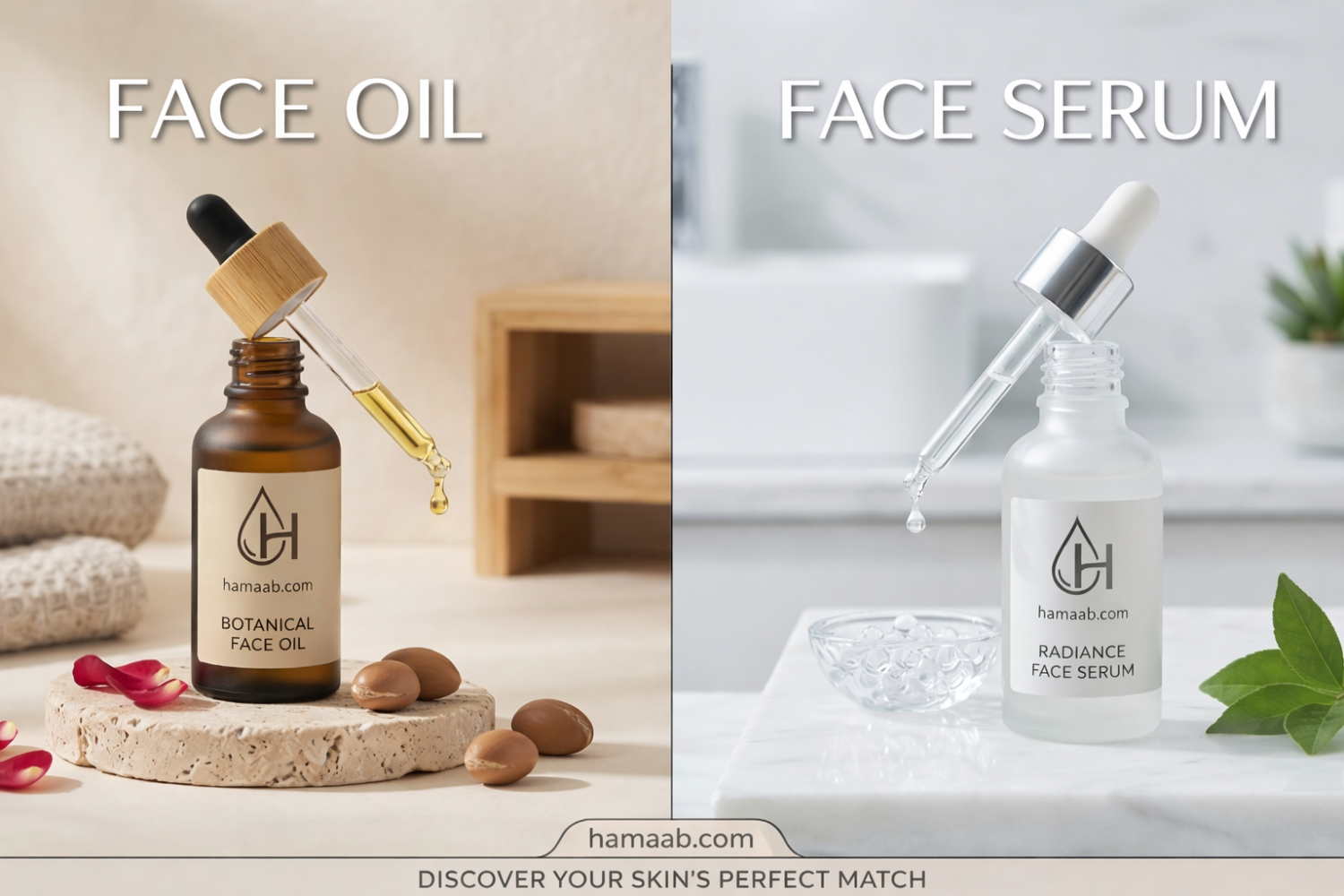
Face Oil vs. Face Serum: The Ultimate Guide to Choosing the Right One for Your Skin

Mini Portable Smart Projectors vs 4K Smart TV: Which One Should You Choose?

Welcome to Hamaab - Your Trusted Online Store for Gadgets, Cosmetics, Jewelry, and More in Pakistan
At Hamaab, we offer a wide variety of high-quality products at affordable prices. Whether you're looking for the latest gadgets, premium cosmetics, stylish jewelry, or fashionable clothing, we have something for everyone. We carefully curate our product catalog to ensure that every item meets your highest standards of quality and value.