


Face Serum vs Face Cream: Which One Should You Use? 2025 Skincare Guide
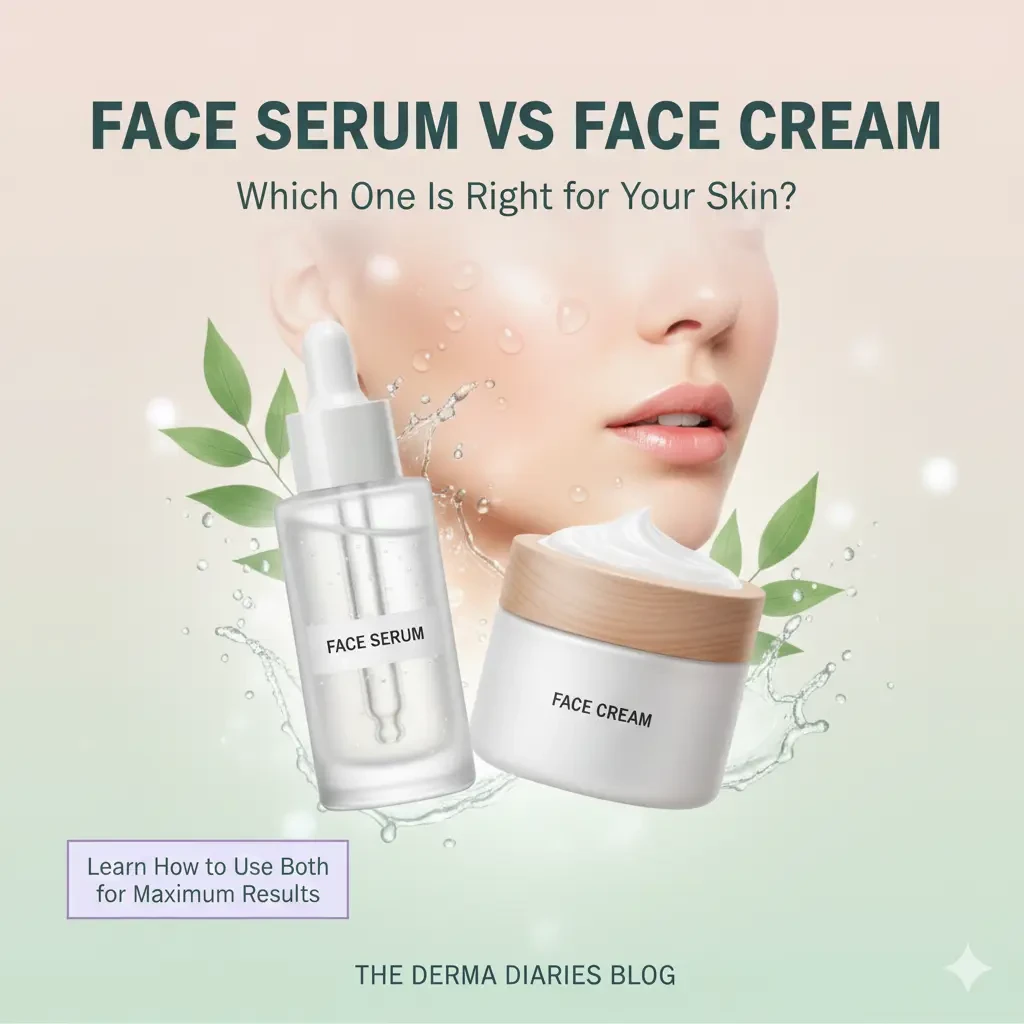
Face Serum vs Face Cream – What’s the Difference & Which One Should You Use? Complete Guide
Confused between a face serum and a face cream? This guide explains what each product does, how they work, their benefits, and how to choose the right one for your skin type. Learn the correct order to apply them for best results.
When it comes to building a simple yet effective skincare routine, two products create the most confusion: face serum and face cream. Many people ask the same questions:
What is the difference between a serum and a cream?
Do I need both?
Which one is better for dry, oily, or sensitive skin?
If you have ever wondered any of these questions, you’re not alone. Both products play an important role in skin health, but they work in very different ways. This blog will help you understand the difference between a face serum and a face cream, how to choose the right one, and how to use both correctly.
1. What is the main difference between a serum and a cream?
A serum targets specific skin concerns like dullness, dark spots, fine lines, and dehydration, while a face cream focuses on moisturizing and protecting the skin barrier.
2. Can I use both serum and cream together?
Yes. The ideal routine is serum first and cream afterward to lock in hydration and boost absorption.
3. Which one is better for oily skin?
Serums are usually better for oily skin because they are lightweight and absorb quickly. Choose a gel-based moisturizer instead of a heavy cream.
4. Should I use serum every day?
Most serums can be used daily, especially hydrating serums like hyaluronic acid or niacinamide. Exfoliating serums should be used 2–3 times a week.
5. Do I still need a cream if I use a serum?
Yes. Serums treat the deeper layers of the skin, but creams seal moisture and protect the barrier—both are important.
6. Which product should be applied first?
Always apply serum first, then face cream. Follow the skincare rule: thin products → thick products.
7. Is serum suitable for sensitive skin?
Yes, but choose gentle formulas like hyaluronic acid, niacinamide, or ceramide serums.
8. Can I only use a cream without serum?
Yes, if you only want basic hydration. But for targeted results (brightening, anti-aging, acne care), a serum is essential.
I’ve personally used these skincare steps and the difference was noticeable within a few weeks. By following the right combination of a serum and a face cream, I saw faster absorption, better hydration, and overall healthier-looking skin. That’s exactly why I decided to write this guide — so others can benefit from the same results.
What Is a Face Serum?
A face serum is a lightweight skincare product that contains a high concentration of active ingredients. Serums are designed to penetrate deeper into the skin and address specific skin concerns.
Key Characteristics of a Serum
-
Lightweight, fast-absorbing texture
-
High concentration of active ingredients
-
Targets specific concerns such as dullness, acne, pigmentation, dehydration, and aging
-
Water- or gel-based (mostly)
Common Ingredients Found in Serums
-
Vitamin C – brightens skin & fades dark spots
-
Hyaluronic Acid – hydrates skin deeply
-
Niacinamide – controls oil & reduces enlarged pores
-
Retinol – anti-aging & smooths fine lines
-
AHA/BHA – exfoliates & clears acne
Benefits of Using a Serum
-
Targets multiple skin issues
-
Provides deep nourishment
-
Improves skin texture
-
Helps fade pigmentation
-
Reduces fine lines
-
Boosts hydration and glow
Serums are powerful because they contain smaller molecules, making it easy for them to reach deep layers of the skin.
What Is a Face Cream?
A face cream, also known as a moisturizer, is thicker and designed to create a protective layer on your skin. Its main job is to keep your skin hydrated, soft, and protected.
Key Characteristics of a Face Cream
-
Thicker texture
-
Helps lock in moisture
-
Forms a protective barrier
-
Prevents water loss
Common Ingredients Found in Face Creams
-
Ceramides – strengthen skin barrier
-
Shea Butter – moisturizes dry skin
-
Glycerin – boosts hydration
-
Squalane – prevents moisture loss
-
Peptides – supports anti-aging
Benefits of Using a Face Cream
-
Keeps skin moisturized
-
Protects the skin barrier
-
Prevents dryness and irritation
-
Reduces flakiness
-
Helps serums work more effectively
Face creams work on the top layers of the skin to maintain softness and lock in hydration.
Face Serum vs Face Cream: How Are They Different?
| Feature | Face Serum | Face Cream |
|---|---|---|
| Texture | Lightweight, water/gel-based | Thick, creamy, rich |
| Main Purpose | Treat skin concerns | Lock in moisture & protect skin barrier |
| Absorption | Fast & deep | Slower, sits on top of skin |
| Concentration | High in active ingredients | Lower concentration |
| Best For | Pigmentation, dullness, aging, hydration | Dryness, barrier repair |
The easiest way to understand this is:
Serum = Treatment
Cream = Protection
Both complement each other and serve different roles in your skincare routine.
Which One Should You Use Based on Your Skin Type?
Choosing between serum and cream depends on your skin type and what your skin needs.
1. For Dry Skin
Dry skin needs hydration and moisturization, both are different.
-
Best Serum: Hyaluronic Acid, Vitamin E, Peptides
-
Best Cream: Thick, nourishing creams with ceramides or shea butter
Dry skin benefits from using both serum and cream together.
2. For Oily Skin
Oily skin produces excess sebum but still needs hydration.
-
Best Serum: Niacinamide, Vitamin C, lightweight hydrating serums
-
Best Cream: Gel-based, oil-free moisturizer
Oily skin can skip heavy creams but should not skip moisturizer completely.
3. For Combination Skin
-
Best Serum: Hydrating + brightening (Vitamin C, HA)
-
Best Cream: Lightweight creams
Combination skin can use lightweight products morning and night.
4. For Sensitive Skin
-
Best Serum: Niacinamide, Hyaluronic Acid, Ceramide Serum
-
Best Cream: Fragrance-free, gentle moisturizers
Avoid harsh ingredients like strong retinol or high-strength acids.
5. For Acne-Prone Skin
-
Best Serum: Salicylic Acid, Niacinamide
-
Best Cream: Oil-free gel moisturizers
Serum treats acne, cream prevents irritation.
Do You Need Both Serum and Face Cream?
In most cases: Yes.
A serum works inside the skin, while a cream works on the surface. Using both ensures complete skincare.
You need both if:
-
Your skin feels dehydrated
-
You want anti-aging benefits
-
You want glowing, plump skin
-
You want to treat acne, pigmentation, or fine lines
How to Layer Serum and Face Cream Correctly
Applying products in the correct order makes a huge difference.
Step-by-Step Routine
-
Cleanse your face
-
Apply toner (optional)
-
Apply serum (2–3 drops)
-
Apply face cream
-
Apply sunscreen in the morning
Rule:
Always apply thin products first, thick products last.
Morning vs Night: When Should You Use Them?
Morning Routine
-
Vitamin C serum
-
Lightweight moisturizer
-
Sunscreen
Night Routine
-
Hydrating or anti-aging serum
-
Rich moisturizer
The night is the best time for repair and nourishment.
Serum or Cream for Winter vs Summer
Winter
-
Skin becomes dry → you need both serum + a thicker cream
-
Choose ceramides, hyaluronic acid, shea butter
Summer
-
Skin becomes oily → use lightweight serum + gel moisturizer
-
Choose niacinamide, aloe gel, water-based creams
Common Mistakes People Make
-
Using too much serum
-
Not using moisturizer after serum
-
Applying cream on damp skin incorrectly
-
Using retinol with Vitamin C without guidance
-
Using random products without checking ingredients
-
Skipping sunscreen after using actives
Avoid these mistakes to get the best results.
Which One Gives Faster Results?
Serums give faster results because they contain high concentrations of active ingredients.
Creams work slower but provide long-term benefits like:
-
Softness
-
Smooth texture
-
Stronger skin barrier
For glowing and healthy skin, both products should work together.
After using both products consistently, I can confidently say that applying a serum first and then sealing it with a good face cream gave me the best results. My skin became smoother, more hydrated, and visibly brighter. If you follow these tips regularly, you can expect the same kind of improvement clear, healthy, and glowing skin.
Recent Posts

Best Vitamin C Serum in Pakistan (2026) – Prices, Benefits & Buying Guide

Why Are Foreign Brands More Popular Than Local Brands in Developing Countries?

Best Cosmetics Products in Pakistan – Top Makeup & Skincare Picks (2026)
Vegan Makeup: Complete Guide to Cruelty-Free & Ethical Beauty in 2026

Best Cosmetics in Pakistan 2026 – Original Makeup & Skincare Brands Online
Ramadan Skincare & Makeup Guide 2026 – Best Long-Lasting Glow Products in Pakistan | Hamaab.com

Best Skin Care Products in Saudi Arabia (2026 Guide) – Top Rated & Available at Hamaab.com

Welcome to Hamaab - Your Trusted Online Store for Gadgets, Cosmetics, Jewelry, and More in Pakistan
At Hamaab, we offer a wide variety of high-quality products at affordable prices. Whether you're looking for the latest gadgets, premium cosmetics, stylish jewelry, or fashionable clothing, we have something for everyone. We carefully curate our product catalog to ensure that every item meets your highest standards of quality and value.