


What Causes Acne? Top Triggers & Dermatologist-Approved Ways to Control Breakouts
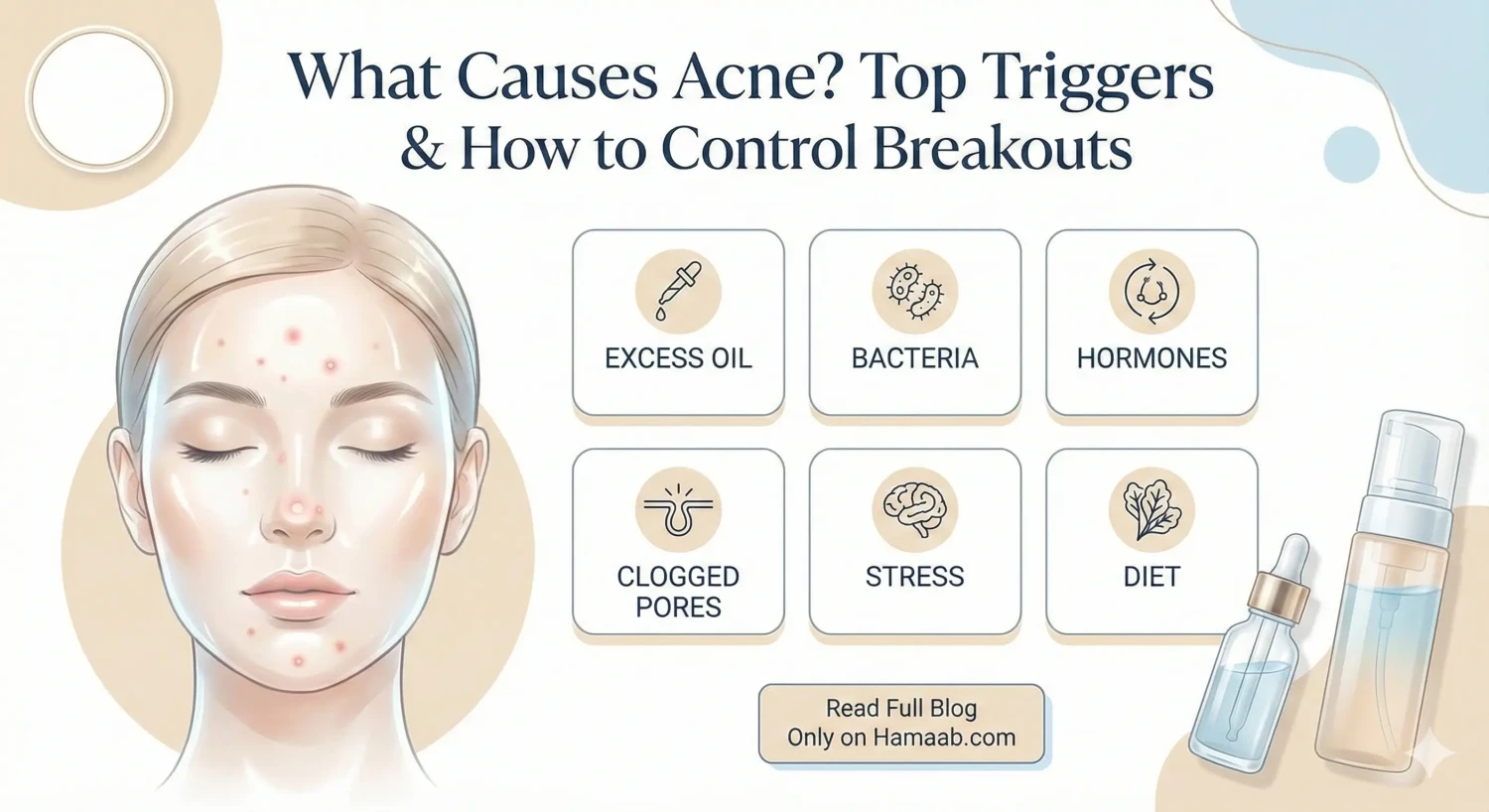
What Causes Acne? Top Triggers & How to Control Breakouts
Acne is one of the most common skin problems in the world — affecting teenagers, adults men, and women everywhere. Pimples, blakheads, whiteheads, and cystic acne happen when pores get clogged with oil, bacteria, and dead skin cells.
Understanding the REAL causes of acne is the key to treating it permanently
In this blog, you’ll learn the main triggers behind acne and the most effective dermatologist-recommended ways to reduce breakouts in fastest way
My Personal Acne Journey
When my breakouts became worse, I idn’t understand why. But after learning my triggers oily skin stress, and wrong products my acne finally started improving. With a prper routine, my skin became clearer, softer, and more stable within a few weeks.
Why Acne Happens Top Causes Behind Breakouts
Acne doesn’t come from just one problem. It’s a mix of internal and external factors.
1. Excess Oil Sebum Production
Your pores naturally produce oil, but too much oil traps dirt and bacteria leading to pimples and blackheads.
Common reasons
-
Oily skin type
-
Hot weather
-
Hormonal changes
-
Wrong skincare products
2. Clogged Pores (Dead Skin Build-up
Dead skin cells pile up on the surface and block pores, causing whiteheads and blackheads.
3. Hormonal Imbalance
When hormones fluctuate, oil production increases — especially durin
-
puberty
-
periods
-
stress
-
pregnancy
This often leads to deep, painful acne.
4. Bacteria (C. acnes
This bacteria lives on your skin naturally, but when trapped inside clogged pores, it triggers inflammation pimples.
5. Diet & Lifestyle
Certain foods can worsen acne for some people:
-
sugary snacks
-
dairy
-
oily/fast food
-
chocolates (for some
Lack of sleep and dehydration also increase breakouts.
6. Using Wrong Skincare Products
Products with heavy oils, fragrance, or pore-cogging ingredients can ause more pimples.
7. Stress & Lack of Sleep
Stress increases cortisol levels → more oil production → more pimples.
My Mid-Journey Review
Once I removed harsh products, reduced dairy, an started using a gentle cleanser + serum daily, my breakouts reduced almost 60% in the first month. My skinfinally stopped reacting every day.
How to Control Acne – Dermatologist Recommended Tips
These steps actually WORK and are safe for daily use
1. Cleanse Twice a Day
A gentle, non-drying face wash keeps pores clean and controls oil.
2. Use Active Ingredients for Clear Skin
Best ingredients for acne include:
✔ Salicylic Acid
Unclogs pores and reduces blackheads.
✔ Niacinamide
Controls oil, tightens pores, reduces redness.
✔ Benzoyl Peroxide
Kills acne-causing bacteria.
✔ Retinol
Prevents new breakouts and smooths skin.
3. Avoid Touching or Popping Pimples
This causes scars and spreads bacteria.
4. Moisturizer Is Still Important
Use a lightweight, non-comedogenic moisturizer to prevent dryness.
5. Use Sunscreen Daily
Unprotected skin becomes sensitive, dark, and slow to heal.
6. Check Your Diet
Try reducing:
-
dairy
-
sugar
-
junk food
Increase:
-
water
-
fruits
-
antioxidants
7. Maintain a Consistent Routine
Acne takes 3–8 weeks to improve consistency is everything.
My Final Review
After following a simple routine, my acne finally setled. The redness reduced, pimples healed faster, and my ski tone became more even. It took time, but the results were worth it. Now I experience far fewer breakouts and my skin feels healthier and fresh.
Who Should Follow This Acne Routine?
| Skin Concern | Benefit |
|---|---|
| Oily skin | Controls shine + reduces breakouts |
| Blackheads | Unclogs pores |
| Acne scars | Heals and fades marks |
| Hormonal pimples | Reduces inflammation |
| Sensitive skin | Calms irritation |
| Frequent breakouts | Long-term improvement |
FAQs
1. Why do I keep getting acne?
Because of oil, clogged pores, hormones, or wrong skincare.
2. Can acne be cured permanently?
Yes — with proper skincare, lifestyle control, and consistency.
3. How fast can acne reduce?
Mild acne: 2–4 weeks
Moderate acne: 6–8 weeks
4. Does diet affect pimples?
Yes, especially sugar and dairy.
5. Can adults get acne?
Yes — very common due to stress and hormones
Acne is completely treatable once you understand the root cause. By using the righ products, improving your routine, and avoiding common triggers, you can reduce breakouts and achieve clearer, healthier skin.
Whether you struggle with oily skin, blackheads, hormonal acne, or sudden breakouts theright approach can make a big difference.
Recent Posts

Best Vitamin C Serum in Pakistan (2026) – Prices, Benefits & Buying Guide

Why Are Foreign Brands More Popular Than Local Brands in Developing Countries?

Best Cosmetics Products in Pakistan – Top Makeup & Skincare Picks (2026)
Vegan Makeup: Complete Guide to Cruelty-Free & Ethical Beauty in 2026

Best Cosmetics in Pakistan 2026 – Original Makeup & Skincare Brands Online
Ramadan Skincare & Makeup Guide 2026 – Best Long-Lasting Glow Products in Pakistan | Hamaab.com

Best Skin Care Products in Saudi Arabia (2026 Guide) – Top Rated & Available at Hamaab.com

Welcome to Hamaab - Your Trusted Online Store for Gadgets, Cosmetics, Jewelry, and More in Pakistan
At Hamaab, we offer a wide variety of high-quality products at affordable prices. Whether you're looking for the latest gadgets, premium cosmetics, stylish jewelry, or fashionable clothing, we have something for everyone. We carefully curate our product catalog to ensure that every item meets your highest standards of quality and value.